
TRL Books » Ghost Plots » Excerpt
Ghost Plots: Read an Excerpt
Introduction
The expression ghost plots was not invented for this book. It is the term J. K. Rowling herself coined to describe a very specific occupational hazard, that of writing a seven-book series.
“I also found myself developing storylines for secondary (or even tertiary) characters that were superfluous to requirements”, the author wrote in a Pottermore essay titled, simply, “Ghost Plots”. “More of a wrench were the plots I worked out for some much more important characters that had to be sacrificed for the bigger story. All of these I inwardly termed ‘ghost plots’, my private expression for all the untold stories that sometimes seemed quite as real to me as the ‘final cut’”.1
It is worth pausing (though it may not be the only point that deserves it) on the moment when Rowling says “quite as real”. For her, the Weasley cousin who spied on Slytherin, the wizard father Dean Thomas never found, the ice cream man who had to be rescued, all of that carried the same weight in the world of the fiction as the events that did end up happening in the pages of Harry Potter. In fact, Rowling herself described the strange social consequences of carrying those ghostly narratives around. “I have occasionally been in conversation with a reader and made mention of part of a ghost plot; looks of consternation cross their faces as, for a split second, they ask themselves whether they have accidentally skipped twenty pages somewhere. I apologise to anyone I might have accidentally wrong-footed in this way; the problem is, literally, all in my head”.2
This book is an attempt to recover those twenty pages that nobody skipped and to reflect a little on them. The evidence is scattered across two decades of revelations. It begins in the “Extra Stuff” section of Rowling’s 2004 website, where the author catalogued her edits with unusual candour; it continues with the Pottermore essays from 2011 to 2016; with interviews, chats and tweets; and, since 2017, with the manuscripts themselves, displayed in the British Library’s “Harry Potter: A History of Magic” exhibition, where some pages of some drafts reveal cut scenes line by line.
This kind of material is usually known in a different way. The drafts of great authors are studied, as a rule, decades after their death, when the papers reach a university or the heirs authorise their publication (Tolkien’s readers had to wait for his son Christopher to edit twelve volumes of manuscripts to learn the discarded versions of Middle-earth). While it is true that the material we know from Rowling is not so vast that it can be taken for the other extreme, it is a little odd to see it in real time, while the saga was still being published and millions of readers were following every word. That decision makes Harry Potter a particular case, that of a work whose internal history could be documented with the author alive and with the memory of her own discards still fresh.
Each chapter of this book takes one ghost plot and walks through it, analysing what the documentary record actually says, how that plot would have fitted into the books we know, why it was cut and where its remains ended up, as long as those last two questions can be answered. When it is possible to do so, the answers turn out to be more interesting than they seem, since perhaps the most constant finding of this whole project is that Rowling almost never erases anything completely. Eliminated characters hand their traits over to the survivors, and abandoned devices reappear in later books in another form. The clearest proof of this is a discarded first chapter of Philosopher’s Stone, which waited thirteen years to become the opening of Half-Blood Prince.
On the selection criteria it is best to be clear. An enormous number of supposed Harry Potter discards circulate on the internet, and the most popular wikis mix verifiable material without warning with inventions by the fans themselves, or use sources in which Rowling was not fully involved, such as films, video games or other merchandising products. This book limits itself to the former. Every ghost plot included here comes from a statement by Rowling, from a document she showed or from a contemporary source that can still be consulted; when a piece of information could not be checked against the original, it was left out, however attractive it was. The speculations about how these plots would have worked in the finished books are mine and are marked as such, though I should say that for those speculations I have taken one liberty, which is deciding to ignore the “butterfly effect”. Most of these alternative stories, had they been included in the saga, would probably have changed the books too much, in ways we might not even be able to imagine, but in order to play at speculating about how it would have affected the story I narrowed the scope and the possible consequences of the changes a little, so as to focus on the nearest parts they might touch, leaving the rest intact.
One last practical warning. The chapters can be read in any order, since each one stands on its own, although they are arranged so that the stories talk to one another and some allow themselves to refer to others. The book as a whole, though, assumes the complete saga has been read; anyone who has not finished the seven novels will find several of its major secrets revealed here, starting with the ending.
A small clarification about the sources is in order. Every quotation is referenced in the notes at the end of the corresponding chapter, with a link to the original where one exists. Quotations from the seven novels refer to the Bloomsbury editions (Philosopher’s Stone, Chamber of Secrets, Prisoner of Azkaban, Goblet of Fire, Order of the Phoenix, Half-Blood Prince, Deathly Hallows, Cursed Child) and are not cited again chapter by chapter.
Mafalda Weasley
Mafalda Weasley is one of the most famous characters J. K. Rowling never wrote. She does not appear in any published book, but among Harry Potter fans she became better known than any other deleted character when Rowling said that the Weasley cousin “made it quite a long way into ‘Goblet of Fire’” before she cut her.1 Mafalda was going to be sorted into Slytherin and would serve as an informant for Harry and his friends, eavesdropping on the Death Eaters’ children in the common room.
Her existence had given Rowling headaches during the planning of the fourth book, as she confessed in a September 2000 interview with Entertainment Weekly. Before having named the character in public, the author described the problem she left behind. “I wrote what I thought was half the book, and ‘Ack!’ – huge gaping hole in the middle of the plot. I missed my deadline by two months”.2 When asked what the hole was, she explained what it was about. “I had to pull a character. There you go: ‘the phantom character of Harry Potter.’ She was a Weasley cousin. She served the same function that Rita Skeeter now serves. Rita was always going to be in the book, but I built her up, because I needed a kind of conduit for information outside the school”.3
The name and the backstory came four years later, in the “Edits” section of her website. Mafalda “was the daughter of the ‘second cousin who’s a stockbroker’ mentioned in ‘Philosopher’s Stone’”.4 The cousin “had been very rude to Mr. and Mrs. Weasley in the past, but now he and his (Muggle) wife had inconveniently produced a witch, they came back to the Weasleys asking for their help in introducing her to wizarding society before she starts at Hogwarts”. The Weasleys “agreed to taking her for part of the Summer, including the Quidditch World Cup, but regretted this almost immediately”.5
On her character, Rowling was blunt in noting that Molly “suspected that Mafalda’s parents simply wanted to get rid of her for a while, because she turns out to be the most unpleasant child Mrs. Weasley has ever met”. However, if unpleasantness was the problem for the characters, her intelligence was the problem for Rowling. “The best thing about Mafalda was that she was a match for Hermione”, she wrote. “To the latter’s horror, Mafalda was highly gifted and a real show-off, so that Hermione was torn between deploring the rule-breaking and longing to join in and beat her”.6
The function she was going to serve in the plot was clear. In Goblet of Fire, Harry needs to learn about the Death Eaters; in the published version he gets that information through a mix of luck, overheard conversations and Rita Skeeter’s articles. The original idea was for Mafalda to be the one supplying the trio with that information, gathered by listening to Malfoy, Nott, Goyle and other children of the Death Eaters who, by the end of the book, would be present in the graveyard alongside Voldemort. The plan to use Mafalda for that, however, did not work. “I really liked her as a character and did not want to sacrifice her”, she wrote, “but she just wasn’t doing the job she was supposed to do so she had to go”. The reason was logistical, since “however bright I made her, there were obvious limitations to what an eleven year old closeted at school could discover, whereas Rita Skeeter, whom I subsequently built up to fulfil Mafalda’s function, was much more flexible”.7 Skeeter, an Animagus able to turn into a beetle and listen in anywhere, could get where Mafalda could not, and her unreliability as a source added a tension that a direct informant did not offer. Had she stayed in the book, Mafalda would have arrived at the Burrow the summer of the Quidditch World Cup, according to Rowling’s original plan. It is during that event that she could have stepped in to explain to the trio who the Death Eaters were (they appear there for the first time), but, as Rowling herself warned, it would not have been believable for that revelation to come from an eleven-year-old girl.
One could theorize about the places in the book where Mafalda would have appeared, like the Sorting Ceremony sending her to Slytherin to the silence of the Gryffindor table and the horrified looks of the Weasleys; Molly sending her a parcel at Christmas anyway, because that is what Molly does, and her replying with a curt note; the Weasley twins playing a prank on her and her reporting them to Snape; the transactional dealings with Hermione after the Yule Ball. The exercise, however, yields less than with the other ghosts in this book, and the reason lies in the very nature of the character. Mafalda is not defined by an event or an action, but by a trickle of appearances. Her involvement would have been scattered across dozens of passing remarks, awkward interventions and scraps of information doled out drop by drop over the whole school year. There is no Mafalda scene to reconstruct, and replacing her with Rita Skeeter amounts to swapping out, one by one, scattered pieces of a jigsaw.
While the stated reason for the cut (or the replacement) is functional, there is a deeper problem in Rowling’s own description, which brushes against the fundamental objection to a new character, because unpleasant characters are hard to sustain, especially in a series for children. The reader needs someone to root for, and Mafalda would have been an exhausting character to write and a worse one to read. The character was caught in a contradiction, since she had to be unpleasant to work as a Slytherin, but if she was too unpleasant nobody was going to care about her. What makes the cut a grey area is that Rowling liked her all the same; “I really liked her as a character and did not want to sacrifice her” is not how one talks about someone one is glad to be rid of.
As has already been seen and sensed, none of that was lost, but rather redistributed. The informant role went to Rita Skeeter, who does exactly the same job with two advantages. She is unpleasant like Mafalda, but in an entertaining way (over the top, theatrical, cartoonishly malicious, so extreme that at times she is funny). More important still for the plot, her information is unreliable, which adds tension instead of taking it away.
The rest of the character was spread around the series. The competitive intelligence went back to Hermione, who becomes more ambitious in the later books. The unpleasantness ended up with Pansy Parkinson and Romilda Vane, who are disagreeable without being important. The resentment towards one’s own family stayed with Percy, who distances himself from the Weasleys in Order of the Phoenix because he is embarrassed by their lack of status.
Even the idea of a Weasley in Slytherin survived, twenty years late. In Cursed Child, Albus Potter is sorted into that house and his friendship with Scorpius Malfoy strains the family, since Harry’s son feels like an outsider and his father does not understand him. The condition of being an outsider within one’s own house, for its part, went to Luna Lovegood, bullied by her Ravenclaw classmates, who plays that role by generating empathy instead of irritation.
What was lost, and it is the only truly regrettable thing, is what Mafalda would have brought to Slytherin. She would not have been a good Slytherin (she would still be selfish and unpleasant), but not an evil one either, just ambitious and clever, nothing more. Besides, being a Weasley, a member of the family associated with goodness, she would have forced the reader to accept that Slytherin is not only the house of Dark wizards, but also the house of those who want to win. That complication had to wait until Half-Blood Prince.
Her relationship with Hermione would have been the best thing in the book, perhaps the most fun to read if one set aside the irritation she generated. Hermione would have seen herself there and hated it, because by the fourth book she had already softened and put friendship above marks; Mafalda would have been a mirror of who she had been three years earlier. It is not hard to imagine that, in a version of the epilogue that never existed, nineteen years later Mafalda would hold a senior post at the Ministry, still ambitious and still alone, with nothing but a career and a reputation, a hollow victory, which is probably what Rowling meant to say with her.
Rowling, J. K. “Extra Stuff: Edits — Mafalda (Goblet of Fire)”. J.K. Rowling Official Website, 15 May 2004. Archived at The Rowling Library, https://therowlinglibrary.com/jkrowling.com/textonly/en/extrastuff_view_id=3.html.↩︎
Jensen, Jeff. “Fire Storm” (interview with J.K. Rowling). Entertainment Weekly, 7 September 2000. Transcript at Accio Quote, https://www.accio-quote.org/articles/2000/0900-ew-jensen.htm.↩︎
Jensen, Jeff. “Fire Storm” (interview with J.K. Rowling). Entertainment Weekly, 7 September 2000. Transcript at Accio Quote, https://www.accio-quote.org/articles/2000/0900-ew-jensen.htm.↩︎
Rowling, J. K. “Extra Stuff: Edits — Mafalda (Goblet of Fire)”. J.K. Rowling Official Website, 15 May 2004. Archived at The Rowling Library, https://therowlinglibrary.com/jkrowling.com/textonly/en/extrastuff_view_id=3.html.↩︎
Rowling, J. K. “Extra Stuff: Edits — Mafalda (Goblet of Fire)”. J.K. Rowling Official Website, 15 May 2004. Archived at The Rowling Library, https://therowlinglibrary.com/jkrowling.com/textonly/en/extrastuff_view_id=3.html.↩︎
Rowling, J. K. “Extra Stuff: Edits — Mafalda (Goblet of Fire)”. J.K. Rowling Official Website, 15 May 2004. Archived at The Rowling Library, https://therowlinglibrary.com/jkrowling.com/textonly/en/extrastuff_view_id=3.html.↩︎
Rowling, J. K. “Extra Stuff: Edits — Mafalda (Goblet of Fire)”. J.K. Rowling Official Website, 15 May 2004. Archived at The Rowling Library, https://therowlinglibrary.com/jkrowling.com/textonly/en/extrastuff_view_id=3.html.↩︎
 Amazon
 Barnes & Noble
 Waterstones
 Foyles
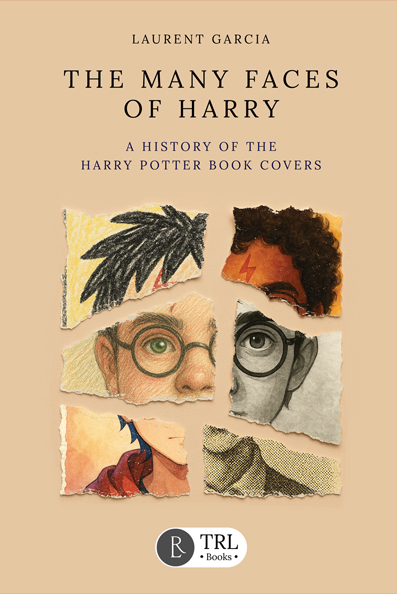 The Many Faces of Harry
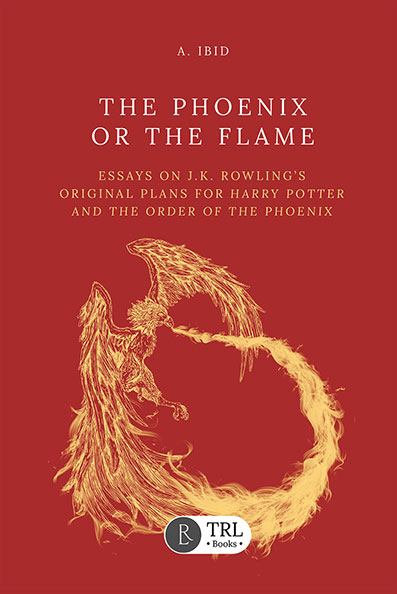 The Phoenix or the Flame
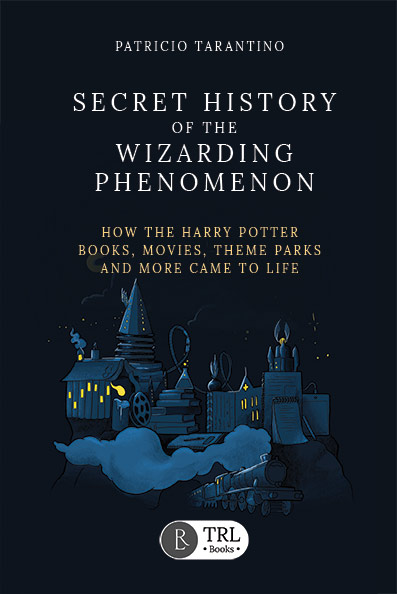 Secret History of the Wizarding Phenomenon