
TRL Books » Secret History of the Wizarding Phenomenon » Excerpt
Secret History of the Wizarding Phenomenon: Read the First Chapter
Foreword
When Patricio asked me to write the foreword to this book, it was just the latest surprise in a long list of exciting Harry Potter-related incidents that have been occurring to me in regular intervals since 1997.
Back in the mid-90s, working in publishing was something I found my way into accidentally, and I was still developing my secretarial/office management skills alongside learning all I could about working for a literary agency; I was inexperienced and had no idea of how my life or career would go. What I did know very well already though, was how to use the power of children’s books to entertain, educate and delight. As a child, I had no TV until I was ten; my parents introduced me to books at a very young age and read to me daily. I was soon escaping into fiction on my own, reading under the covers after lights out, and absorbing the power of a good tale without it being any effort whatsoever. It was a natural part of my life. It has not been the same for many other children since; TV and, more recently, computer games and the internet have taken up large parts of the time which I would have used for reading, and teachers (especially with the UK’s new stringent curriculums) don’t seem to have as much time to introduce the pleasure of reading great stories to their classes.
So, I was delighted to find a book I recognized spoke to me as the tales of my childhood had. A book that I couldn’t put down, where the world was fully realized and the story had many satisfying elements, was all mine. When I was selling the manuscript, I had no way of knowing at the time that it would give the world the same great entertainment as it had given me; I just wanted it out there to see what it could do. The fact that a book could expand its audience and start to become a phenomenon by word of mouth through children was incredible. I left the agency before it was published, but I kept going into bookshops to make sure they had copies on display, and listening out for mentions of it in the papers.
I started to hear more about Harry in the press during the first year of publication, including spotting an article in the London Evening Standard in August 1998 about a lawyer who had gone by mistake to a court in Dudley for a case, instead of to Dursley, two hours away. I wrote a letter to the paper pointing out the Harry Potter connection and it was published a couple of days later. The first of my special Harry treats came a couple of months later when my aunt invited me to hear J.K. Rowling speak at the Cheltenham Literary Festival, and I was able to give her a copy of that letter at the signing afterwards.
Other treats over the next few years included being interviewed and photographed for the Times, The Scotsman and People magazine, amongst others; being invited to appear on The Oprah Winfrey Show in 2005 (which included filming with the excellent Barry Cunningham ahead of the show); being invited to speak at Chicago Ideas Week in 2013 on the same bill as Buzz Aldrin (who said my dress looked like galaxies!); being taken to see the Cursed Child as a birthday present; and being filmed for a Japanese documentary to commemorate the 20th anniversary of publication. It was also great to be on a BBC radio panel with Christopher Little in 2017, talking about the books 20 years on, and I think it was evident how proud we both were of the creation we’d helped to bring to the world.
Some of my more thrilling pleasures have been much simpler, but in many ways more profound: noticing people reading the books on the tube or bus in the early days; finding a pile of Chamber of Secrets all labelled up in a classroom as part of a school reading scheme; ubiquitous references to Harry Potter in films, books and across popular culture; and seeing my 6-year-old niece’s letter to Santa this Christmas (“some Gryffindor Quidditch robes, a Nimbus 2000 and a real wizard’s wand”). Meeting fans who’ve grown up with the books and are totally immersed in Harry’s world is amazing. I mentioned to two young American women at The Casual Vacancy launch event that the first time I’d met Jo at a book signing, she was a redhead, and they were excited: “You were there at the beginning!” They were such devoted fans they’d even studied the author’s sartorial details over the years. I’m a huge fan of the band Duran Duran, so I recognize that sort of obsessive behavior. It’s totally normal, of course! It was also a privilege to meet Geoff and Vicki of “All the Stations” in summer 2017. They were engaged in a project to visit every railway station in the UK and had built up a worldwide following on YouTube; Vicki, being a dedicated Harry Potter fan, was looking for related adventures as part of her epic journey, and I went to join them for a chat when they came along my local railway line, which was very exciting as I also love train journeys.
I’ve been approached for interviews by writers from fan websites over the years, which is how I was first in touch with Patricio, and it’s always an honor to help them out with their research. I feel that if they’ve taken the time to track me down, I want to give them a good experience in return. My story is only a small part of Harry’s journey, but it’s one which I’ve had great pride and pleasure in over the years, and respecting that achievement is something I do for myself. I’ve talked to fans for various online Potter communities and their breadth of knowledge and dedication always impresses me greatly.
I’ve been lucky enough to meet Jo Rowling on a few occasions and she always remembers me; she remembered Patricio too, when he fixed it for me to meet her at The Casual Vacancy signing in his absence. My tremendous aunt arranged again for me to see her speaking at the Harrogate Crime Writing Festival around the time of the third Robert Galbraith book and the organizers were kind enough to let me ask ‘Robert’ a question in the session; I was able to thank her for her secret references to me in The Cuckoo’s Calling, only two of which I’d spotted. The third she had to point out to me. I consider this a mark of thanks from the author to me for my small part in her story and am still in awe that she did it!
There are many Harry Potter-related experiences which I have not yet had, for example visiting the studio tour in England, or the theme park in America, or the Pottermore online community, and I still haven’t read some of the spin-off books e.g., Fantastic Beasts or Beedle the Bard. Some readers may be surprised to hear this, but I have my own special experience of the Harry Potter phenomenon to sustain me, just as the novels have done for millions of young people across the world. Patricio’s research for this book has been extensive and wide-ranging and he’s been dedicated in searching out all the details about the novels and what they mean to everyone whose lives they touch. I hope you recognize some of your own special experience with the Wizarding World captured in these pages.
Bryony Evens,
“the enormously important
Harry-Potter-champion”
according to J.K. Rowling.
Before Harry
“I have no nostalgia, whatsoever… Childhood… I mean, I wouldn’t go back if you paid me. Ever.”
– J.K. Rowling (Stahl, 2002)
It’s impossible to tell the Harry Potter story without telling the story of its author. Joanne Rowling’s life has so many turns that the comparison to a fairy tale is unavoidable, a comparison as old as the publication of her first book, the one that launched a series that has revolutionized the literary world more than any other in history. It turned its author into the first female multi-millionaire writer, broke sales and printing records with each new release, and reshaped not only the publishing industry but also the film industry, changing how studios treat other book-to-screen adaptations. The phenomenon has generated countless merchandise lines, theme parks on several continents, museums, tours, and auctions of valuable items tied to the brand. The series also took the world of theater by storm with a new story set after the events of the seven novels.
The main character begins his journey to Hogwarts School of Witchcraft and Wizardry aboard the Hogwarts Express, a scarlet train that carries him from London into the Wizarding World. The train leaves from King’s Cross station, and it takes Harry to the place where he finally feels at home among people who care about him. Just like Harry’s adventures, the story of Peter Rowling and Anne Volant also begins at King’s Cross station.
In 1963, eighteen-year-old Peter Rowling and Anne Volant were both serving their country. Peter was part of the British Royal Navy and Anne served with the Women’s Royal Naval Service, the women’s branch that provided administrative support to the Navy. They met for the first time at the London station, boarding a train bound 800 km north for Arbroath, Scotland. The nine-hour journey gave them plenty of time to get to know each other.
Peter and Anne kept seeing each other over the following months. The relationship deepened, and Anne became pregnant. The news made them rethink their plans: they no longer wanted to settle in the city, but in a rural area where their children could grow up close to nature. Peter got a job as an apprentice at the Bristol Siddeley factory, near Bristol, the largest city in the English West Country. Before moving and starting a new family life, though, the couple had to follow the social norms of the time and get married first.
The wedding took place on March 14, 1965 at All Saints Parish Church, in North London, near the home of Anne’s family. The Victorian building no longer functions as a church; it has been converted into eight luxury apartments (one of them, with four bedrooms, went on sale for £1,750,000). Anne, only twenty years old at the time, was five months pregnant, and her condition did not go unnoticed.
Opportunities for a young couple expecting a baby were not as favorable in the 1960s as they are now, but the Rowlings worked hard. In the ninth month of pregnancy they moved into a one-story house at 109 Sundridge Park, in Yate, a town 15 km from Bristol. The area wasn’t fully developed yet. The closest place to shop was the Yate Town Shopping Centre, 300 meters away, which had opened the previous year. Today Yate hasn’t stopped growing, and its center is filled with hundreds of shops.
The Cottage Hospital, where J.K. Rowling was born, stood at 240 Station Road, less than 500 meters from the new home. Originally a private home called Melrose House, in 1920 it had been turned into a health center as a memorial to those killed in the First World War. In 1951, it stopped functioning as a hospital (its medical units were transferred to Bristol), and The Cottage Hospital became a maternity ward exclusively. Anne Rowling was admitted at the end of July and took one of the twelve beds there. She was looked after by Irene Norton, the head of nursing. On July 31, 1965, Anne gave birth to a “fat and blonde” baby, as J.K. would describe herself years later. The baby was registered under number B006725 in the Sodbury district, and her parents decided to give her only one name: Joanne.
Although she was born in Yate and lived her early years there, whenever Joanne Rowling was asked years later where she was born, she would say Chipping Sodbury. The town is less than a kilometer away, known as Yate’s “wealthy neighbor”, and famous for its picturesque architecture and antique shops.
The Rowlings’ only daughter would not stay an only child for long. Before Joanne turned two, her parents had a second girl, Dianne. This time the birth was at home. The reason is unknown, though it was probably because The Cottage Hospital did not allow visits from children, not even the siblings of newborns. Dianne was born on June 28, 1967, and that day became little Jo’s first memory. Joanne recalls that her father gave her modelling clay to keep her busy, and she admits that she was so entertained by it that she didn’t even see her sister that day.
The two sisters went by the short form of their names, Jo and Di. They did not stay long in Yate, as Peter was promoted at the Bristol factory, which would merge with the Rolls-Royce factory in 1971. Despite carrying the name of the automaker, Rolls-Royce also built aircraft engines, and Peter Rowling was put in charge of them at the company.
Six kilometers from Yate sat Winterbourne, a community larger than a town but not quite a city. Yate’s population was growing into the kind of city the Rowlings had wanted to avoid, and Winterbourne was exactly the sort of place they had been looking for. They bought a three-bedroom house at 35 Nicholls Lane from the Evans family for just over £3,000, and settled there the same year Dianne was born. It was at the Nicholls Lane house that Joanne began her connection with books. A reading of The Wind in the Willows by her father is one of the earliest readings that Joanne and her sister remember.
At just five years old, Joanne went to school for the first time. The Saint Michael’s Church of England School in Winterbourne was a few blocks from her home, and she enjoyed her very first day. When her mother came to pick her up at the end of it, however, Joanne assumed school was over forever and that she would never have to come back.
Over the years it has been rumored that the school’s principal, Alfred Dunn, and several of the teachers were inspirations for the Hogwarts staff, but J.K. Rowling has never confirmed it, and there is no obvious evidence behind the theory.
Joanne Rowling’s first piece of writing came a year later, at age six, and was titled “Rabbit”. As she recalls: “Certainly the first story I ever wrote down (when I was five or six) was about a rabbit called Rabbit. He got the measles and was visited by his friends, including a giant bee called Miss Bee. And ever since Rabbit and Miss Bee, I have wanted to be a writer, though I rarely told anyone so. I was afraid they’d tell me I didn’t have a hope” (The Not Especially Fascinating Life So Far of J.K. Rowling). In other stories, the main character was simply her sister. Other characters were animals that could talk to humans. Over time, Di stopped being the protagonist of the stories and instead became Joanne’s number one reader, something Joanne would acknowledge years later, in the dedication of her first published book.
But rabbits were not only part of a fantasy world; some neighbors with a familiar surname had two of them (one white and one black) that the Rowling sisters fed, secretly envious that they didn’t have one of their own. Just six houses away, at 29 Nicholls Lane, lived Ian and Vikki Potter, brothers almost the same age as Jo and Di. Their mother, Ruby Potter, had also become friends with Anne, and the two of them swapped books. Ruby remembers that Anne spent much of her time reading to her daughters, because she believed it was important for their education.
The four of them, and sometimes Christopher White, another neighbor, spent their afternoons playing on the pavement. “The children were forever pinching the brooms from the garage to use as broomsticks,” recalls Ruby Potter (Smith, 2003). They would sit under a tree and make up spells and magic potions. The one actually inventing them was Jo, while the others listened. Although she was still too shy to show or read her own stories, she didn’t deprive her friends of her imagination when it came to playing. When Harry Potter and the Philosopher’s Stone was published many years later, Ruby wrote to Joanne to congratulate her. In her reply, Joanne clarified that Harry Potter was not based on Ruby’s son Ian, although she had borrowed the surname. In 2014, however, Rowling said that, even after deciding on the name Harry for her character, she wasn’t sure about the last name, and considered several alternatives. One of them was Batt, so Harry Potter could have been Harry Batt.
Life in Winterbourne was quiet, but it would not stay that way for long. The Potters and Rowlings stopped being neighbors in 1974, when Peter and Anne fell in love with a small town on the other side of the Severn Bridge. The bridge, opened almost ten years earlier by the Queen, connected Bristol with the Welsh town of Chepstow. Tutshill, just next to Chepstow and separated from it only by the River Wye (which also forms the boundary between Wales and England), was where the Rowlings eventually moved.
Tutshill was a paradise for little Jo and Di. There was nature everywhere. The town sat between the River Wye and the River Severn, with the Forest of Dean spreading behind it across more than 100 square kilometers, and it clearly stuck in J.K. Rowling’s memory. The Forest of Dean is where Harry, Hermione, and Ron hide in the early chapters of the seventh book, fleeing the Death Eaters. At ages seven and nine, the move was the most important change in the Rowling sisters’ lives. The stone house they moved into was called The Church’s Little House because it sat next to St. Luke’s Church, where Jo and Di also did some cleaning work for extra money (and where they were both baptized at age eleven).
On the other side of the church was Tutshill Church of England School, where Joanne continued her education for the next two years. It wasn’t a school Rowling cared for, mainly because of her experience with Miss Morgan. In the autumn of 1974, on the first day of class, Miss Morgan gave her new group of 40 students a math test. It included topics such as fractions, which Joanne had never seen before. She received a low score, and Morgan, who divided and seated her students by ability, put Joanne in the ‘least brilliant’ section.
As the year went on, Joanne improved her grades with a great deal of effort and was moved to the left side of the classroom, where the ‘brilliant’ students sat. Rowling remembers that the promotion came at a cost: once she changed seats, she no longer sat with her friends. It has never been confirmed, but some suspect that this practice of sorting students by ability may have been an inspiration for the Hogwarts Sorting Hat. What Rowling herself has confirmed is that Miss Morgan inspired Severus Snape, the Hogwarts potions teacher who mistreated Harry and his classmates in the early books: “There are a number of people who influenced the character of Snape in my books, and that teacher was definitely one of them. I found it extremely scary” (Fraser and Rowling, 2001).
On the school’s 150th anniversary, which coincided with the publication of the third Harry Potter book, Rowling was invited back to host a presentation and launch event for Harry Potter and the Prisoner of Azkaban. She ultimately declined. In 2001, she did honor the school in her book Quidditch Through the Ages, naming one of the teams the Tutshill Tornados. It is no coincidence that she also gave them a dark and light blue uniform, the same colors as the uniform she wore for two years.
Another team in the book is the Wimbourne Wasps. Less than two kilometers away was West Moors, where J.K. Rowling’s paternal grandparents, Kathleen and Ernie, ran a grocery store the Rowling sisters loved playing in. The grandparents, who lived in a house above the shop, let their granddaughters play with the real merchandise. Little Joanne would carefully weigh each product while Di played the customer. It was at age nine, the same year she moved to Tutshill, that her grandmother Kathleen died of a heart attack. “I adored her, and my saddest memory of that time is of her death” (Fraser and Rowling, 2001). Years later, when the publisher suggested adding an initial for a fictitious middle name, Joanne thought of her grandmother and chose the letter “K”.
Her other grandparents inspired Harry Potter and the Prisoner of Azkaban. Stanley and Frieda Volant, Anne’s parents, lived in the same house in Tufnell Park for more than 30 years, until Stanley’s death in 1977. Joanne remembers them as an unhappy couple, but she remembers both her grandfathers, Stanley and Ernie, with affection, and their names will be familiar to Harry Potter fans: they are the drivers of the Knight Bus, which rescues the protagonist at the beginning of the book. Joanne and her sister, however, were not very fond of their grandmother Frieda, who preferred the company of her many dogs to that of her granddaughters. The author has not confirmed it, but it isn’t hard for fans to suspect that Aunt Marge was inspired by Frieda. Even after the move, the Rowlings kept literature as present as ever in their home. After her first attempt at writing, “Rabbit”, Joanne wrote “The Seven Cursed Diamonds”, another short story. No copies of these stories are known to exist, and unless the author herself has kept them, we may never get to read them. It’s worth noting, though, that the idea of seven cursed objects was already in her mind. It is the central plot of the boy wizard’s series.
Literature also came in through the classics, and through not-so-classic books, since Anne’s sister sent boxes of romance novels every month. The children’s authors young J.K. Rowling read most were Enid Blyton and C. S. Lewis, but the one who really left a mark on her was Elizabeth Goudge, whose The Little White Horse became her favorite book. “And perhaps more than any other book, it has a direct influence on the Harry Potter books” (Fraser, 2002). Since 2000, The Little White Horse editions have carried a recommendation from Rowling on the cover (“I absolutely adored The Little White Horse”, The Bookseller, November 9, 1999), which prompted many to pick it up. The similarities with the boy wizard’s series are clear: a thirteen-year-old orphan protagonist, characters with unusual names, animals that talk and hide things, and even a magical creature who prepares food (think of the house-elves in the Hogwarts kitchens).
When little Joanne, devoted reader as she was, entered adolescence, she wanted to keep that side of her for her private life, since being a bookworm wasn’t considered very popular among teenagers. “Hermione was very easy to create because she is based almost entirely on myself at the age of 11. She is really a caricature of me” (Weir, 1999).
In 1976, most Tutshill School students moved on to Wyedean School, a few hundred meters from The Church’s Little House where the Rowling family lived, though technically it sat in the neighboring town of Sedbury. Today, the street that separates the former Rowling house from the high school is a long row of houses, making it hard to tell where Tutshill ends and Sedbury begins. It was at Wyedean that Mr. Nettleship, a chemistry teacher, taught. Although it has never been confirmed, he too is believed to have inspired Professor Snape, because of the way he questioned the class, and because Joanne disliked chemistry. Nettleship himself finds the idea of being the character’s inspiration rather amusing.
Once Dianne joined Joanne at Wyedean School, their mother applied for the position of Chemistry Department assistant, under Nettleship himself, and got it. From then on, the sight of the three Rowling women walking to and from school became a regular fixture in Tutshill. Even so, the most influential figure for teenage Jo was Lucy Shepherd, the 20-year-old literature teacher. Not only because Jo could finally express herself through writing in Ms. Shepherd’s classes, but also because Shepherd shared her passion for women’s potential in the modern society that was taking shape in the 1970s. Rowling still treasures the letter Lucy Shepherd sent her when Harry Potter and the Philosopher’s Stone was published.
Rowling was fourteen when her great aunt gave her Jessica Mitford’s Hons and Rebels. She had already read Emma several times and Jane Austen was her favorite author, but Mitford’s autobiography changed everything. “My most influential writer, without a doubt, is Jessica Mitford. When my great-aunt gave me Hons and Rebels when I was 14, she instantly became my heroine” (Fraser, 2002). Years later, when she had her first daughter, Rowling didn’t hesitate to name her after her favorite writer.
In 1985, Anne Rowling was 40 years old, twenty years older than her eldest daughter, when doctors gave her troubling news. They had confirmed that she had multiple sclerosis, a chronic disease marked by coordination problems and muscle weakness. The first symptom had appeared two years before the diagnosis: she had trouble lifting a tea kettle. Multiple sclerosis, or MS, still has no cure today, which is why Joanne Rowling founded The Anne Rowling Regenerative Neurology Clinic in 2013. It supports the University of Edinburgh in researching neurological conditions, especially neurodegenerative diseases.
While Peter Rowling kept climbing the ranks at Rolls-Royce, Anne had to leave her job as a chemistry assistant at Wyedean School. The illness no longer let her handle test tubes and other instruments. She stayed at home and read everything she could find about her condition, going through good days and bad ones, sometimes struggling to walk. Whenever her health allowed, she would visit the church next to her house to clean, as an excuse to get out, and her daughters sometimes went with her. Joanne and Di signed the church’s guestbook on at least five occasions. That guestbook was open to the public until a few years ago, and visitors could see the author’s signature in it. Out of fear that it might be stolen, the book was put away and is no longer available for viewing.
In her last years at Wyedean, Joanne quickly became friends with a Welshman named Sean Harris, who had just enrolled. Harris owned a turquoise Ford Anglia, which carried the pair on adventures through pubs in nearby cities, both on the English side (places like Bath or Bristol) and across the border to Cardiff, the capital of Wales.
Those trips were a chance for Joanne to clear her head and think about the future. It wasn’t just the distance that helped Rowling, but Sean’s support itself. “[Sean] was the first person with whom I really discussed my serious ambition to be a writer and he was the only person who thought I was bound to be a success at it, which meant much more to me than I ever told him at the time” (WalesOnline, 2004).
In Harry Potter and the Chamber of Secrets, Joanne got to thank Sean, not only by dedicating the book to him, but by giving the turquoise Ford Anglia a starring role. The car no longer belonged to Sean Harris; its new owners were the Weasleys. And just as the car had once rescued Rowling from the grey of Tutshill, this time it would rescue Harry, not once but twice: first from his uncle’s house, where he had been locked up, and then from the Forbidden Forest.
In her final year at Wyedean, Joanne was elected “Course Representative” by both the teaching staff and her fellow students, a sign of how popular she had become at school, in stark contrast to her early years, when she had endured verbal and even physical abuse for being the responsible girl who kept on reading.
Jo applied to the University of Oxford to study Modern Languages. Her parents, who hadn’t gone to university themselves, were amazed at the idea. She sat the exam and, after some time on the waiting list, was told she hadn’t been accepted. The rejection didn’t slow her ambitions down.
At eighteen, she started at the University of Exeter instead. A two-hour drive from Tutshill (a little less by train), Exeter was the only university southwest of Bristol, and that may be why Rowling chose it. With her books and an acoustic guitar, she left her parents’ house and moved into student housing.
Being away from home, and no longer being the brightest in her class, may have been the reasons her Hermione-like side faded, replaced by someone more interested in a social life than in academics. Her teachers don’t remember her as a brilliant student, but as an average one with no obvious gift for writing. Her parents weren’t very confident in her either. They argued that a degree in English Philology wouldn’t be useful and pushed her toward a foreign language instead, claiming it could land her a job as a bilingual secretary. Following their advice, Joanne ended up studying French and Classical Philology, the latter clearly out of her interest in the historical and mythological, an interest that runs through the Harry Potter books.
Listening to albums by The Smiths, her favorite band at the time, Rowling kept giving her imagination free rein. Her friend Yvette remembers that Joanne wrote stories in which the men of the day were the villains, captured by a group of female spies made up of her and her friends. It was during these years in the English West Country that she met the man who would later inspire Rubeus Hagrid. He was a member of the Hells Angels, a huge and intimidating biker. Every time he walked into the pub, he made everyone feel uneasy, until he sat down and started talking about his garden and how his plants had been withering lately, and the room would relax.
With ups and downs, and some struggle on her exams, Rowling made it through the first two years of college. The third year, however, required her to move to France. Joanne spent a year teaching English at a school in Paris, sharing an apartment with an Italian named Fernando, a Spanish girl, and a Russian woman. She would later use her experience in France as inspiration for the Beauxbatons Academy in Harry Potter and the Goblet of Fire. The name Voldemort, Harry Potter’s nemesis, also comes from French: it means “flight from death”.
In her fourth and final year at the University of Exeter, Rowling’s main concerns were the final exams and her roughly 3,000-word French thesis. Joanne spent much of her senior year in the campus library, often forgetting to return books and racking up a £50 fine.
Despite all those hours in the library, though, she wasn’t reading for her thesis or her final exams. English literature was what fascinated her, and it was there she became a Tolkien admirer after reading The Lord of the Rings. The parallels are many, but Rowling denies being inspired by the epic. “Tolkien created a whole mythology. I don’t think anyone could claim that I have done that. On the other hand, he didn’t have Dudley” (J.K. Rowling chat, 2000b). She did eventually balance her reading for pleasure with enough studying to pass her exams. Graduation came in the summer of 1987, with Peter and Anne (now confined to a wheelchair) in attendance. They were happy to see their daughter finish college after all her hard work. It was a very proud day for the family.
After graduation, Joanne Rowling moved to the Clapham neighborhood in London with other classmates from university. Her first job out of school was at a temp agency, which placed her in a publishing office where Rowling was in charge of typing rejection letters for incoming manuscripts. For a time she also worked at Amnesty International, where she started out enthusiastic, but slowly her expectations were worn down by how hard it was to achieve real change. Across all those jobs, she spent her free time and energy writing an adult novel. Whenever her co-workers went to the pub for lunch, Joanne went off on her own to keep writing, which led her co-workers to suspect she was having an affair. The solitude let her push the novel forward (it remains unpublished to this day).
In June 1990, Joanne moved to Manchester with a boy she had started dating at Exeter. She had made up her mind to move in with him, but after a weekend of trying and failing to find an apartment in Manchester, it was time for her to head back to London.
When twenty-four-year-old Joanne arrived back at Piccadilly Station, she had no idea what was about to happen. She boarded the packed train and found a seat by the window. Unfortunately, the engines were damaged and the train sat there for four hours.1 If the mechanics had been faster, today’s libraries and bookstores would look very different. As Joanne watched cows grazing across the English countryside through the train window, the idea of an orphan boy attending a school of witchcraft and wizardry came to her. She hadn’t been looking for inspiration, but the most important idea of her life arrived that day.
“The idea came out of nowhere and I could see Harry very clearly; this scrawny little boy and it was the most physical rush of excitement. I’ve never felt that excited about anything to do with writing. I’ve never had an idea that gave me such a physical response. So, I’m rummaging through this bag to try and find a pen or a pencil or anything. I didn’t even have an eyeliner on me. So, I just had to sit and think. And for four hours, because the train was delayed, I had all these ideas bubbling up through my head” (Harry Potter and Me, 2002).
By the time the long journey ended at Euston Station, in London, Rowling had already pictured certain characters, not necessarily by name: Ron Weasley, Hagrid, and the ghosts Peeves and Nearly Headless Nick. She had even imagined Hogwarts Castle. When she got back to her room in Clapham, she started writing down everything she remembered in her notebook. It would still take seven years for her first book to be published, and several more for the worldwide phenomenon we know today to arrive.
Recession was tightening its grip on England, even if Prime Minister Margaret Thatcher refused to admit it. Within a few months, the Iron Lady would leave office. That night, none of it mattered. For the first time, a quill traced its ink across a page of Harry Potter. The Wizarding World had just been conceived.
I have tried, by all means, to get the exact date of this event. All UK train companies I have contacted assured me that they do not keep a record of damage from almost 30 years ago. I got the same response from government organizations, as well as non-profit organizations. There’s nothing I would have liked more than to know the exact date that Harry Potter came into the world. For now, it will remain a mystery.↩︎
The story continues in Chapter 2, “First Pages”.
 Amazon
 Waterstones
 Barnes & Noble
 Foyles
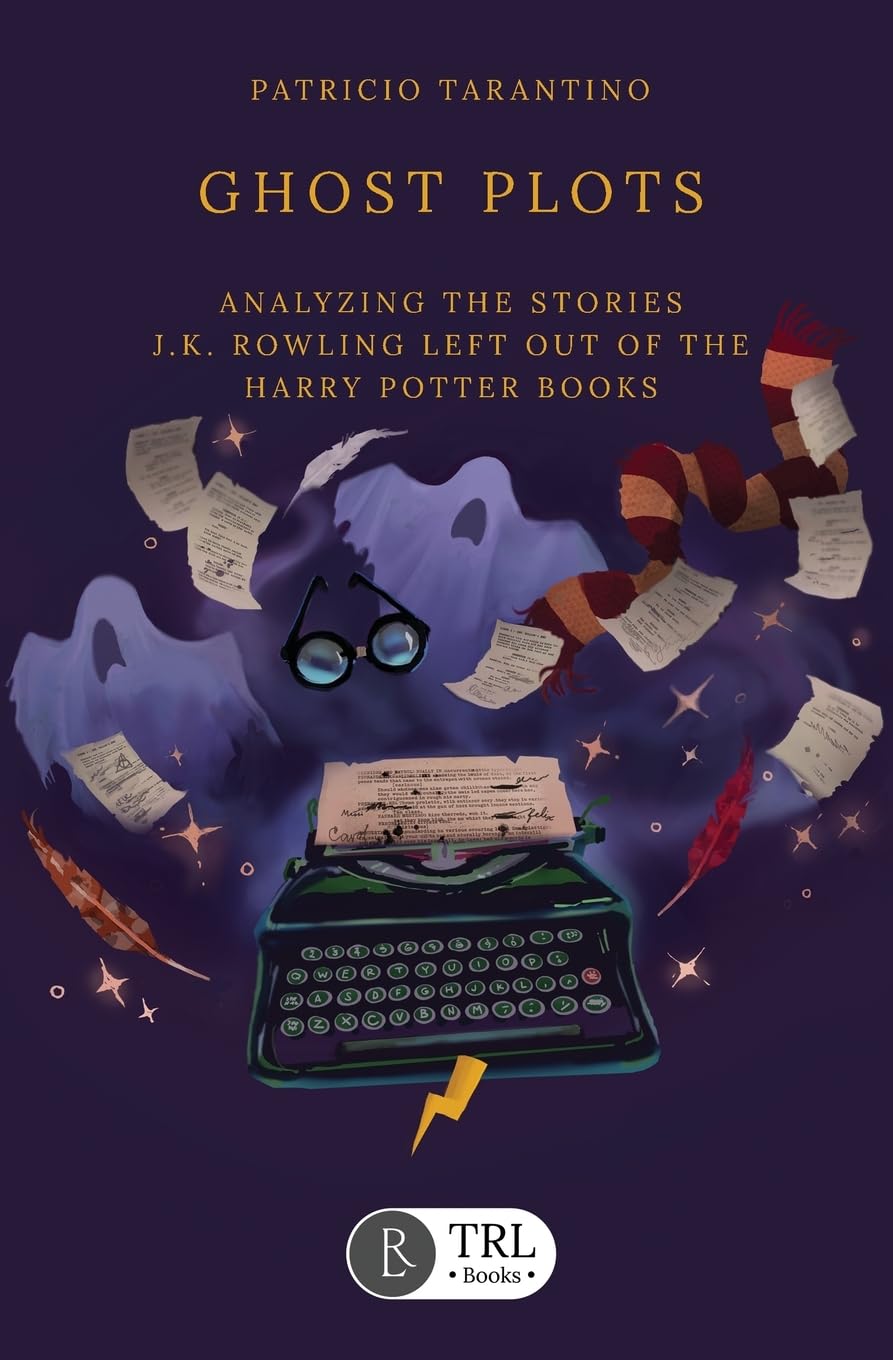 Ghost Plots
 The Many Faces of Harry
 The Phoenix or the Flame